
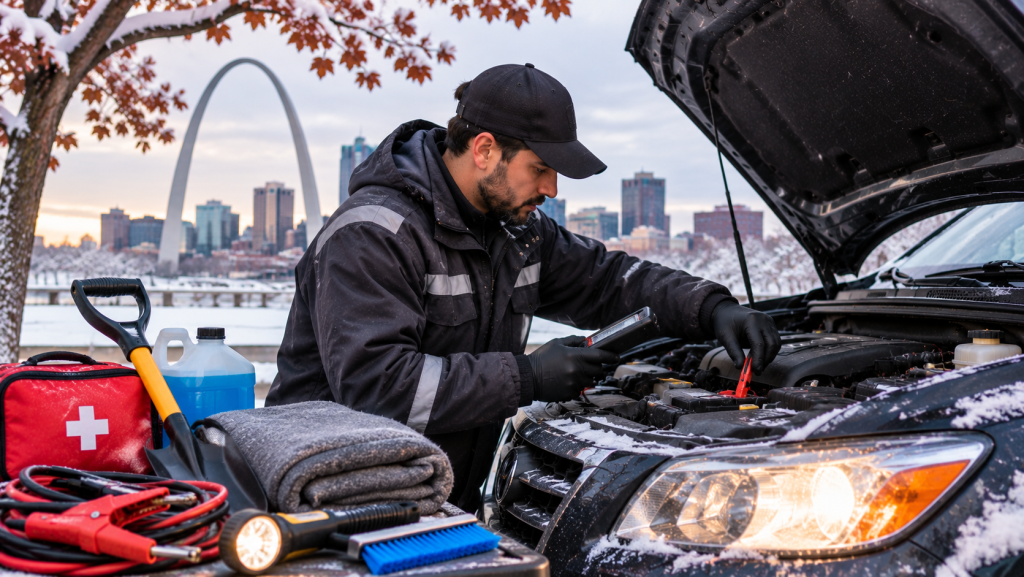
Winter in St. Louis can change quickly. A mild afternoon can turn into freezing rain by evening, and a cold snap can leave a car that started fine all fall refusing to turn over. Most winter breakdowns are not caused by the weather alone. They happen because a small problem was already there, and the cold exposed it. This guide covers the car checks worth doing before winter gets serious, a list of items to keep in your trunk, what to do if you break down and how a mobile mechanic can help you get ready at home. If you are searching for a winter car check in St. Louis, start here.
Why Winter Is Hard on a Car
Cold air changes how a car behaves. Batteries have a harder time delivering power, fluids thicken, tire pressure drops and rubber parts stiffen. Add road moisture, ice and short days, and every weak spot gets a harder test. Our article on car care through a St. Louis year explains how the seasons here, from humid summers to icy winters, each ask something different of your vehicle. The goal of a winter check is to find the weak spots on your driveway, where they are easy to fix, instead of on the side of a road.
The Winter Car Check
Battery
The battery is the most common cause of a winter no start. Cold weather makes an engine harder to turn over while also reducing what the battery can deliver. Warning signs include slow cranking, dim headlights, a battery warning light and a battery that has been in the car for several years. A technician can test the battery and the charging system in a few minutes, and the result tells you whether it is healthy or near the end of its life. If you have questions about how batteries work and when they need attention, our car battery FAQ is a good place to start. Check that the terminals are clean and the connections are tight.
Tires
- Pressure. Cold air lowers tire pressure, so check all four tires, plus the spare, when they are cold. Use the pressure listed on the door jamb sticker or in your owner’s manual.
- Tread. Look at the wear bars in the grooves or use a tread depth gauge. Worn tires lose grip quickly on wet, icy or snowy roads.
- Condition. Look for cuts, bulges, cracks and uneven wear.
- Type. All season tires and winter tires behave differently in cold weather. Your owner’s manual and a tire professional can help you decide what fits your driving.
Brakes
Wet and icy roads make stopping harder, so it matters that your brakes are in good shape. Watch for squealing, grinding, a soft pedal, pulling to one side, vibration when stopping and a brake warning light. Brakes are a safety system, so repairs belong with a qualified technician. If the pedal ever feels wrong while you drive, slow down safely, pull over when you can and do not keep driving as usual.
Wipers, washer fluid and glass
- Replace blades that streak, skip or are cracked.
- Fill the washer reservoir with a fluid made for cold weather, so it does not freeze on the windshield.
- Look for chips in the glass, since cold can make them spread.
- Test the defroster and the heater. A windshield you cannot clear is a safety problem.
Lights
Winter brings short days and poor visibility. Test headlights, high beams, brake lights, turn signals, hazard lights and fog lights if you have them. Clean the lenses, because road grime and salt build up quickly.
Coolant and other fluids
Coolant protects the engine from freezing as well as overheating. Check the level and the condition, and follow your owner’s manual for the right type and mix. Also review the oil level, brake fluid, power steering fluid and transmission fluid, and look under the car for fresh leaks.
Belts and hoses
Cold makes rubber stiffer and less forgiving. Look for cracks, fraying, glazing and soft or swollen spots. A squealing noise at startup can be a sign that a belt needs attention.
What to Keep in the Trunk
A small kit makes a breakdown or a long delay much easier to handle. Keep these items in your car through the winter:
- Jumper cables or a jump starter. A charged jump starter does not need another car.
- Blankets, warm clothes, gloves and a hat. If the heater stops working, staying warm matters.
- A flashlight with fresh batteries, or a headlamp that leaves your hands free.
- A phone charger or power bank.
- An ice scraper and a snow brush.
- A small shovel.
- Traction material, such as sand, salt or cat litter, to help a stuck tire grip.
- Water and snacks that will not spoil in the cold.
- Reflective triangles or flares, so other drivers can see you.
- A first aid kit.
- A tire pressure gauge, and a spare tire that is properly inflated, plus the jack and tools to use it.
- Washer fluid, since road spray uses it up quickly.
- Paper copies of key information, such as your insurance and roadside assistance numbers, in case your phone dies.
Check the kit once in a while. Flashlight batteries die, snacks expire and blankets get borrowed.
Habits That Prevent Winter Trouble
- Keep the fuel tank at least half full. It gives you a buffer if you get stuck and need the heater, and it limits moisture buildup in the tank.
- Warm up gently. Give the car a moment after starting, then drive smoothly at first.
- Clear all the snow and ice from the windows, mirrors, lights and roof before you drive.
- Slow down and leave extra distance. Wet and icy roads need more room to stop.
- Check the forecast before long trips, and share your route with someone.
- Wash off road salt and grime from time to time, including the underside if you can.
If You Break Down
- Get safely off the road. Pull onto the shoulder or into a parking lot if you can, and turn on your hazard lights.
- Stay with the car if conditions are dangerous. It gives you shelter and makes you easier to find.
- Call for help. Use roadside assistance, a mobile mechanic or emergency services if you are in danger.
- Stay warm. Use blankets and layers. If you run the engine for heat, keep the exhaust pipe clear of snow and crack a window slightly, since a blocked pipe can let dangerous fumes into the cabin.
- Be visible. Set out reflective triangles or flares if it is safe to do so, and stay out of traffic lanes.
- Do not walk along a busy road in poor visibility unless you must.
Stop Driving If You Notice
- A brake warning light, a soft pedal or brakes that do not respond normally.
- Steam, a temperature warning or a burning smell.
- An oil pressure warning light.
- A flashing check engine light.
- Steering that suddenly feels loose or heavy.
- Any smell of exhaust fumes inside the cabin.
Pull over in a safe place as soon as you can and get help rather than pushing on. Your owner’s manual explains what each warning light means for your vehicle.
How a Mobile Mechanic Can Help
A mobile mechanic can come to your home or workplace in St. Louis and go through the items that matter most before cold weather arrives. That can include a battery and charging system test, a check of tires, wipers, lights and fluids, a brake inspection and small repairs such as bulbs and wiper blades. If your car already struggles to start in the cold, a technician can look at the cause instead of leaving you to guess. Some jobs, such as certain brake, steering or suspension repairs and tire work, may need a shop with specialized equipment, and a good technician will tell you honestly which jobs those are.
Quick Winter Checklist
- Test the battery and clean the terminals.
- Check tire pressure, tread and condition, including the spare.
- Look at the brakes for noise, pedal feel and warnings.
- Replace worn wipers, use winter washer fluid and test every light.
- Check coolant, oil and other fluids, and look for leaks.
- Inspect belts and hoses.
- Pack a winter kit with a jump starter, blankets, a flashlight, a charger, a scraper and a shovel.
- Keep the tank at least half full.
A little preparation turns a winter surprise into a manageable day. If you would like help getting your car ready, visit the Mobile Mechanic Pros of St. Louis homepage to learn more, or contact us to schedule a visit before the cold sets in.