
Few American cities ask as much of a vehicle across a full calendar year as St. Louis does. Summers here bring the kind of thick, Mississippi River humidity that settles in for months, while winters bring genuine ice storms, the kind that coat power lines and tree branches in glaze ice rather than just dropping snow. Between these two extremes sits a genuinely demanding spring and fall transition period of its own. Understanding what each part of this cycle actually does to a battery, tires, and cooling system helps St. Louis drivers stay ahead of problems rather than reacting to them once a season is already testing the vehicle at its worst.
Why St. Louis’s Full Range Of Seasons Matters More Than Any Single Extreme
A city that deals with only heat, or only cold, allows a vehicle’s systems to adapt to one dominant condition. St. Louis instead demands genuine performance across the full spectrum, intense summer humidity, cold winters capable of producing serious ice storms, and the kind of freeze thaw transition periods in spring and fall that bring their own wear patterns. This means no single seasonal maintenance approach covers the whole year here, and a car prepared only for summer heat or only for winter ice will inevitably struggle during whichever season it was not built to handle.
What Summer Humidity Does To Your Battery And Cooling System
St. Louis summer humidity accelerates corrosion on exposed metal components and electrical connections, since moisture in the air promotes the oxidation process responsible for rust, and this humidity persists consistently enough here to give corrosion genuine opportunity to develop over the course of a season. Heat itself, layered on top of this humidity, accelerates the internal chemical breakdown that shortens battery life, meaning St. Louis batteries face a particularly demanding combination during the hottest stretch of the year.
Cooling systems work overtime during this same period, since the combination of heat and humidity reduces how efficiently a radiator can shed heat compared to drier conditions at a similar temperature. A cooling system with any existing weakness, whether that is low coolant or an aging hose, is considerably more likely to reveal that weakness during a humid St. Louis summer than it would in a milder or drier climate.
Why Winter Ice Storms Are A Different Challenge Than Ordinary Cold
Ordinary cold weather reduces battery performance and can make roads slippery, but a genuine St. Louis ice storm introduces a specific hazard that ordinary winter cold does not, a glaze of ice coating every surface including the roadway itself, often before any snow has fallen to provide visual warning of the danger. This kind of ice is notoriously difficult to see and even more difficult to gain traction on, meaning tire condition matters enormously during these specific events, considerably more than it would during a routine snowy day.
Batteries also face acute stress during a genuine ice storm, since the combination of cold temperatures and the extended idling many drivers rely on while waiting out hazardous conditions places extra electrical demand on a system that is already producing less power due to the cold. If you have experienced a starting failure during a St. Louis winter, our guide on the top 10 reasons your car won’t start and how to get back on the road covers a range of causes worth ruling out, several of which become considerably more likely once genuine ice storm conditions arrive.
What The Transition Seasons Quietly Add To The Mix
Spring and fall in St. Louis bring their own freeze thaw cycling, particularly during the shoulder weeks when overnight temperatures still dip below freezing while afternoons warm considerably. This pattern contributes to pothole formation on local roads, adding tire and suspension wear on top of whatever summer humidity or winter ice has already caused. These transition periods are also a practical opportunity to catch up on maintenance before the next extreme arrives, since neither summer heat nor winter ice is actively stressing the vehicle during these more moderate weeks.
Building A Maintenance Approach That Matches This Full Cycle
Rather than a single annual checkup, St. Louis drivers benefit from timing specific checks around each part of this cycle, battery and cooling system attention heading into summer, tire tread and battery testing again heading into winter ahead of the season’s first real ice threat, and a general inspection during the milder spring and fall weeks to catch anything the previous season’s extremes may have caused.
This approach also makes it easier to budget for maintenance throughout the year, since spreading these checks across the seasons tends to be more manageable than trying to address everything at once during a single visit. It also means each check happens at the moment it is actually most useful, rather than on a fixed calendar date that may or may not align with when a particular system is under its greatest seasonal strain.
Signs Your Vehicle Is Feeling St. Louis’s Full Range Of Seasons
A spongy brake pedal or corroded connections often point toward accumulated summer humidity wear, while a battery that cranks slowly specifically during a winter cold snap or ice event suggests the combination of cold and electrical demand has already exposed a weakness. Uneven tire wear or a vehicle that pulls to one side can indicate pothole related damage from the freeze thaw transition seasons, worth checking regardless of which part of the year you happen to notice it.
Why A Mobile Mechanic Fits St. Louis’s Full Year Reality
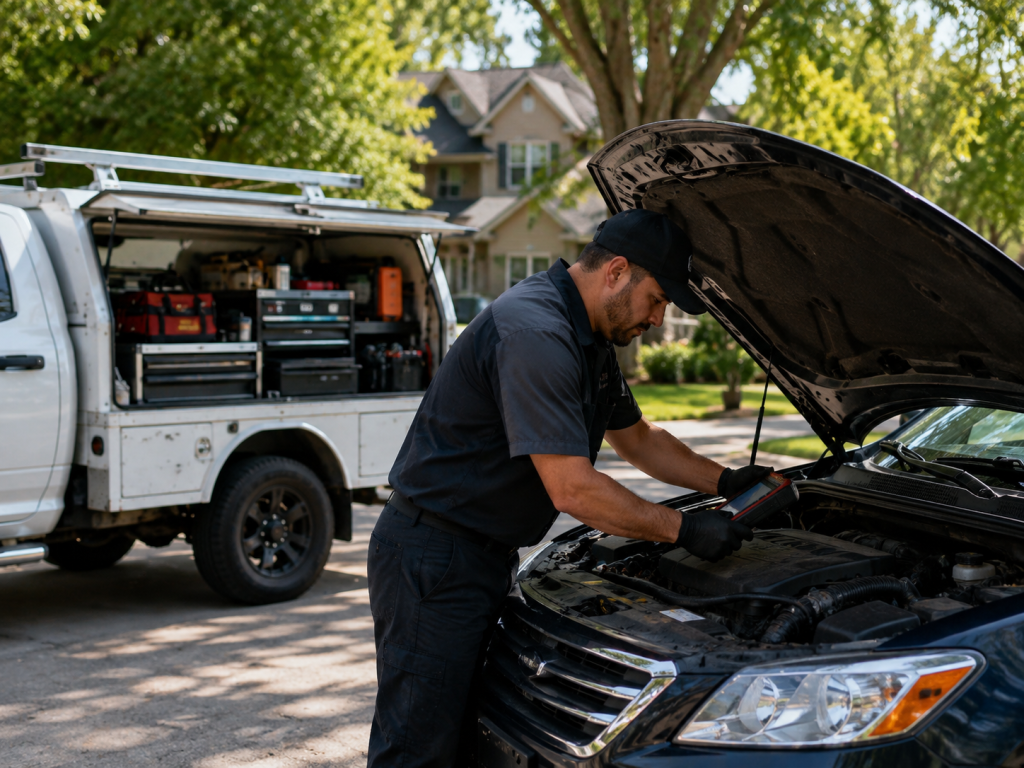
Given how much St. Louis’s demands shift throughout the year, having a technician who can adjust the focus of an inspection based on the season offers a real advantage over a single generic annual visit. A mobile mechanic can come to your home or workplace and address whichever concern matters most for the current stretch of the calendar, from summer cooling system checks to pre winter battery and tire readiness.
We covered the broader benefits of this approach in our article on why mobile mechanics are better than traditional auto shops in St. Louis, which explains how convenience and flexible scheduling come together, particularly useful for keeping pace with a climate that shifts its demands so dramatically throughout the year.
Stay Ahead Of St. Louis’s Full Seasonal Cycle
St. Louis’s swing from humid summers to icy winters, with genuine freeze thaw transitions in between, tests a vehicle across the full range of what a climate can demand. Matching your maintenance approach to this actual cycle, rather than a generic calendar built for a milder or more consistent climate, is one of the most effective ways to keep your car reliable throughout the year, no matter which season happens to be testing it hardest at the moment.
If it has been a while since your vehicle had a proper checkup, visit our homepage to learn more about our services, or reach out through our contact us page to schedule a visit at your home or office anywhere in the St. Louis area.
A little proactive attention timed to St. Louis’s actual seasonal cycle can help your car stay dependable through humidity, ice, and everything in between.